
Understanding the post-concussion energy gap
This early energy gap is one reason ketones for concussion are increasingly discussed as a way to support brain energy when glucose use is temporarily reduced. After a concussion, the brain often struggles to use glucose efficiently. Glucose is the brain’s primary fuel under normal conditions, but head injury can temporarily disrupt how glucose is transported into brain cells and how it is used once inside.
At the same time, the brain’s energy demand increases. It must manage inflammation, restore cellular balance, and maintain basic communication between neurons. This creates an early “energy gap” where the brain needs more fuel but has reduced access to its usual energy source.
This metabolic mismatch is a well-documented and temporary part of concussion recovery. It does not mean the brain is permanently damaged. It reflects how hard the brain is working to protect itself and recalibrate.
During this period, ketones become relevant because they offer an alternate energy source the brain can use when glucose pathways are under strain. Understanding this option helps families feel more informed and prepared during early recovery.
Read More: Sleep Problems After Concussion in Children: Why Your Child Is Tired but Awake
How the brain normally gets its energy
Under normal circumstances, the brain relies almost entirely on glucose for energy. Glucose enters brain cells through specialized transport systems and is used to generate the energy required for signaling, focus, memory, and emotional regulation.
Neurons depend on steady glucose availability to maintain electrical activity and communication between brain regions. When energy supply is stable, the brain can efficiently support attention, mood balance, sleep regulation, and cognitive clarity.
Energy balance is essential for the brain to function smoothly. Even small disruptions in fuel availability can affect how quickly the brain processes information and adapts to daily demands.
What changes after a concussion
After a concussion, the brain’s ability to transport and metabolize glucose often becomes less efficient. This does not stop energy use entirely, but it reduces how easily the brain can access its primary fuel.
At the same time, energy demand rises as the brain works to restore balance, manage inflammation, and stabilize stressed neural pathways. Inflammatory responses and cellular stress further increase the energy burden.
These combined factors create a short-term energy mismatch. The brain needs more fuel while having less access to glucose. This mismatch helps explain symptoms such as fatigue, fogginess, slowed thinking, and increased sensitivity to stimulation during early recovery.
Read More: The Gut, Hormones, and Mood Connection After a Head Injury: Gut Hormones and Mood After Concussion
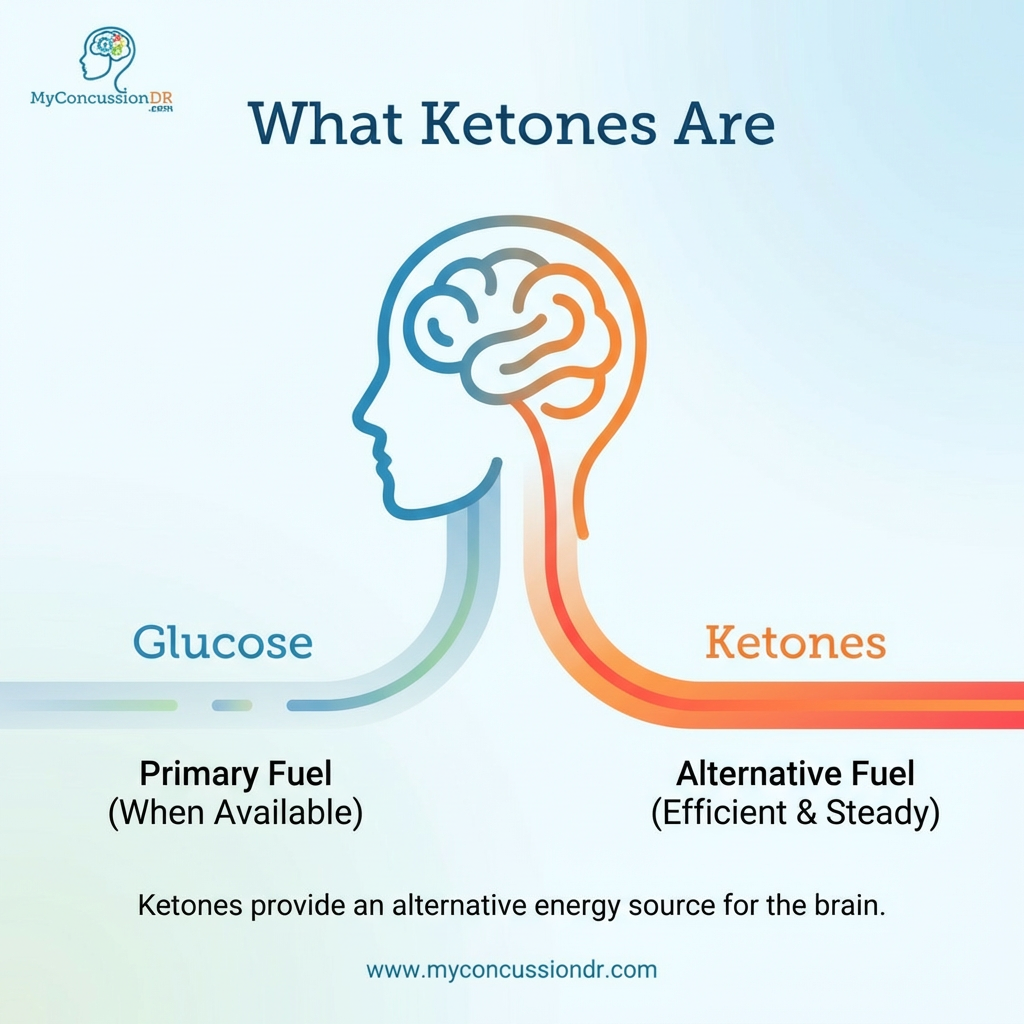
What ketones are
Instead of being a treatment, ketones for concussion are best understood as an alternative fuel that may help the brain meet its energy needs while standard recovery care continues. Ketones are energy molecules produced when the body breaks down fat for fuel. This process occurs naturally during fasting, prolonged exercise, or periods when glucose availability is reduced.
The brain has the ability to use ketones efficiently, especially during times of metabolic stress. Ketones enter the brain through different transport pathways than glucose, which allows them to bypass some of the limitations that occur after concussion.
Because ketones do not rely on the same metabolic routes as glucose, they can serve as an accessible energy option when glucose use is temporarily impaired. This makes them particularly relevant during the early post-concussion window.
Read More: Why Multitasking Feels Impossible After a Concussion: Difficulty in Multitasking After Concussion
Why Ketones for Concussion Matter During Early Recovery
When glucose use is reduced, ketones provide an alternate energy route that the brain can draw from. By supporting cellular energy availability, ketones may help reduce the overall metabolic strain placed on healing brain tissue.
Maintaining energy balance helps the brain perform essential functions more comfortably, including attention, emotional regulation, and sleep signaling. This does not replace rest or other supportive care, but it may complement the body’s natural recovery processes.
Ketones act like a backup power source when the main energy system is temporarily offline. They help keep essential functions running while the primary system resets.
What science-backed research suggests
A growing body of research in brain metabolism shows that ketones can support energy availability during periods of physiological stress. When glucose uptake or utilization is reduced, the brain is still able to use ketones efficiently to meet basic energy demands.
Studies examining brain injury and metabolic stress highlight ketones as a usable alternative fuel when glucose pathways are impaired. This is particularly relevant during early recovery, when the brain experiences both increased energy demand and reduced access to its primary fuel source.
Ongoing research continues to explore how ketones may help support cellular energy production, mitochondrial function, and overall metabolic stability during the early post-injury window. While this research is still evolving, the existing findings help explain why ketones are increasingly discussed in conversations about brain energy support.
Brain metabolism research shows that ketones can help maintain energy availability when glucose uptake is reduced, allowing the brain to function more efficiently during periods of metabolic strain.
Read More: Balance Problems After Traumatic Brain Injury: How the Brain Relearns Stability
How ketones fit into a supportive recovery approach
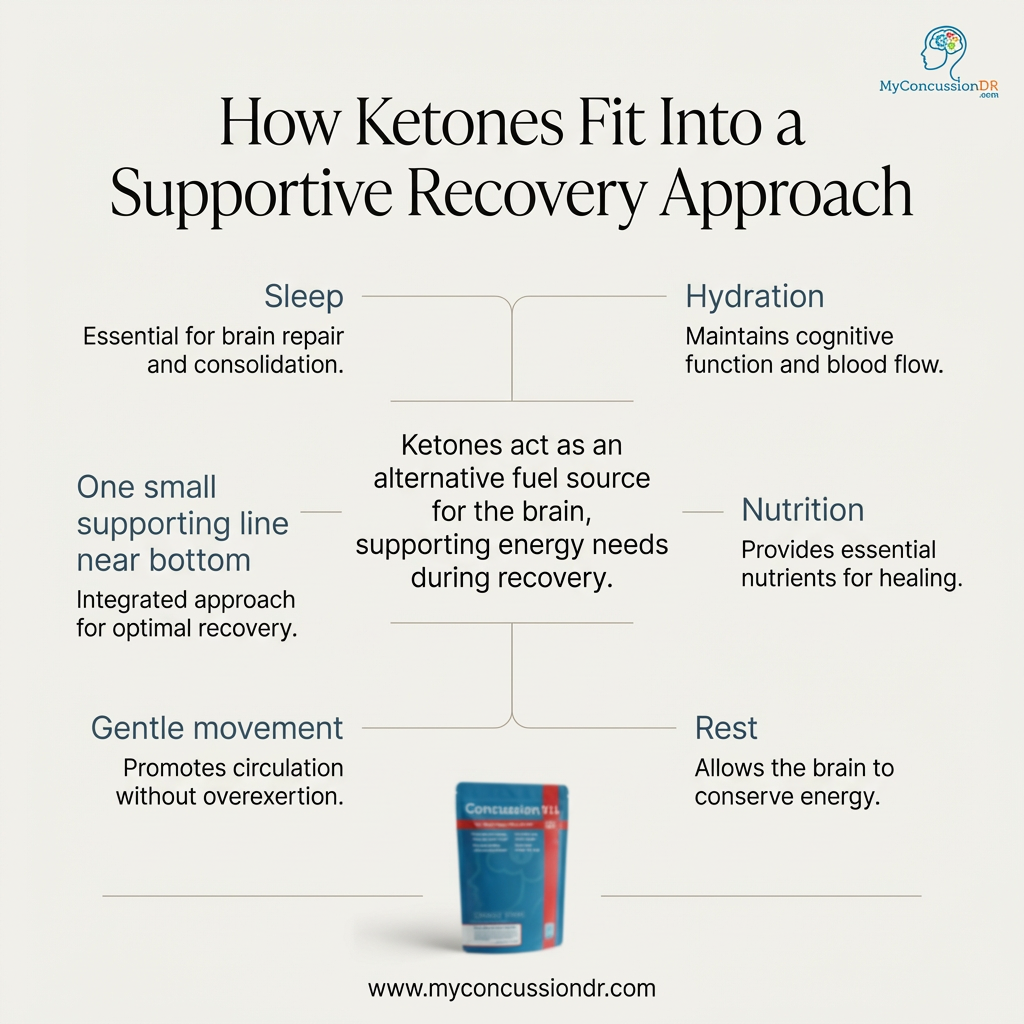
Ketones are not a replacement for medical care or professional guidance. Instead, they fit into a broader recovery approach that supports the brain’s natural healing processes.
Ketone support works best when combined with foundational recovery practices such as adequate rest, steady hydration, consistent sleep routines, and gentle movement as tolerated. Balanced nutrition supports both glucose and ketone pathways, allowing the brain to access multiple energy sources during recovery.
This integrated approach helps reduce unnecessary strain on the brain while it works to restore balance and stability.
Science-backed nutritional support such as Concussion911 includes ketone-based ingredients designed to help support brain energy metabolism during the early post-concussion window. It is not a medical treatment but a supportive option for individuals seeking to assist natural recovery processes when energy pathways are under temporary strain.
Read More: Vitamin D and the Brain: Supporting Resilience After Head Injury
When ketone support may be most relevant
Ketone support may be especially relevant during:
- The first several days after a head injury
- Periods when fatigue, fogginess, or low energy are prominent
- Times when the brain is under higher metabolic strain due to inflammation or stress
During these phases, providing an alternate energy source may help support the brain’s ability to function more comfortably while recovery progresses.
Takeaway
After a concussion, the brain may temporarily struggle to use glucose efficiently. Ketones offer an alternate energy source that can help support brain energy needs during this vulnerable period. Understanding this metabolic shift empowers families to make informed, supportive recovery choices grounded in science-backed insights rather than uncertainty.
Learn how early science-backed nutritional support may help support brain energy during recovery. Explore Concussion911.
Required Disclaimer
Concussion911 is a dietary supplement and is not intended to diagnose, treat, cure, or prevent any disease. This product has not been evaluated or approved by the U.S. Food and Drug Administration (FDA). Any statements made are for informational purposes only and are not medical advice. Always consult with a healthcare professional before beginning any new supplement.
FAQs
1. What happens when the brain does not have glucose?
When glucose availability is reduced, the brain experiences an energy shortfall. This can lead to fatigue, slower thinking, difficulty concentrating, and increased sensitivity to stress. The brain can adapt by using alternative fuels such as ketones during these periods.
2. Can the brain run 100% on ketones?
No. The brain cannot rely entirely on ketones. Even during ketosis, the brain still requires some glucose for specific functions. Ketones can supply a large portion of the brain’s energy needs, but not all of them.
3. What do ketones do for the brain?
Ketones serve as an alternate energy source when glucose use is limited. They can support cellular energy production, help maintain brain function during metabolic stress, and reduce strain on glucose-dependent pathways.
4. Why can the brain only use glucose?
Under normal conditions, glucose is the brain’s preferred fuel because it is efficient and readily available. However, the brain is not limited to glucose alone and can also use ketones when glucose metabolism is impaired or reduced.
5. What kills brain cells the most?
Severe oxygen deprivation, major traumatic injury, stroke, and prolonged metabolic failure are among the most damaging factors to brain cells. Temporary energy disruptions, such as those seen after a concussion, do not typically cause widespread brain cell death.
6. Can the brain use glucose without insulin?
Yes. Most glucose uptake into the brain occurs independently of insulin. Brain glucose transport relies on specialized transporters that allow glucose to enter brain cells even when insulin levels are low.