
When Exhaustion Does Not Lead to Sleep
Many parents feel confused and concerned when their child is clearly exhausted but still cannot fall asleep. These sleep problems after concussion in children are very common and can make nights feel unpredictable for the whole family. Bedtime becomes a struggle, nights feel restless, and mornings begin with frustration instead of rest. This experience can be especially distressing when your child looks worn out but remains wide awake.
Sleep disruption is very common after a concussion, particularly in children. The developing brain responds differently to injury than an adult brain, and sleep is often one of the first systems affected. What makes this pattern confusing is that tiredness and sleep readiness are not controlled by the same brain processes.
After a concussion, a child may feel physically drained while the brain remains alert or overstimulated. This disconnect can make it seem as though sleep should come easily, yet the brain struggles to shift into rest mode. In most cases, this pattern is temporary and reflects how the brain is adjusting during recovery rather than a long-term problem.
Read More: The Gut, Hormones, and Mood Connection After a Head Injury: Gut Hormones and Mood After Concussion
Why Concussions Disrupt Sleep in Children
This kind of pediatric concussion sleep disturbance often shows up as trouble falling asleep, staying asleep, or feeling rested in the morning. Sleep is regulated by several brain systems working together, including those that manage energy, hormones, circadian rhythm, and nervous system balance. After a concussion, communication between these systems can become less coordinated.
During recovery, the brain uses more energy than usual to restore balance and repair stressed pathways. At the same time, the systems that signal when it is time to sleep may not function as smoothly. This can leave a child feeling physically tired while the brain remains active or alert.
In children, this imbalance can be more noticeable because their brains are still developing and more sensitive to changes in energy use and stimulation. The result is a state where the body wants rest, but the brain struggles to slow down enough to allow sleep.
The body is ready for rest, but the brain has difficulty shifting into sleep mode.
Read More: Why Multitasking Feels Impossible After a Concussion: Difficulty in Multitasking After Concussion
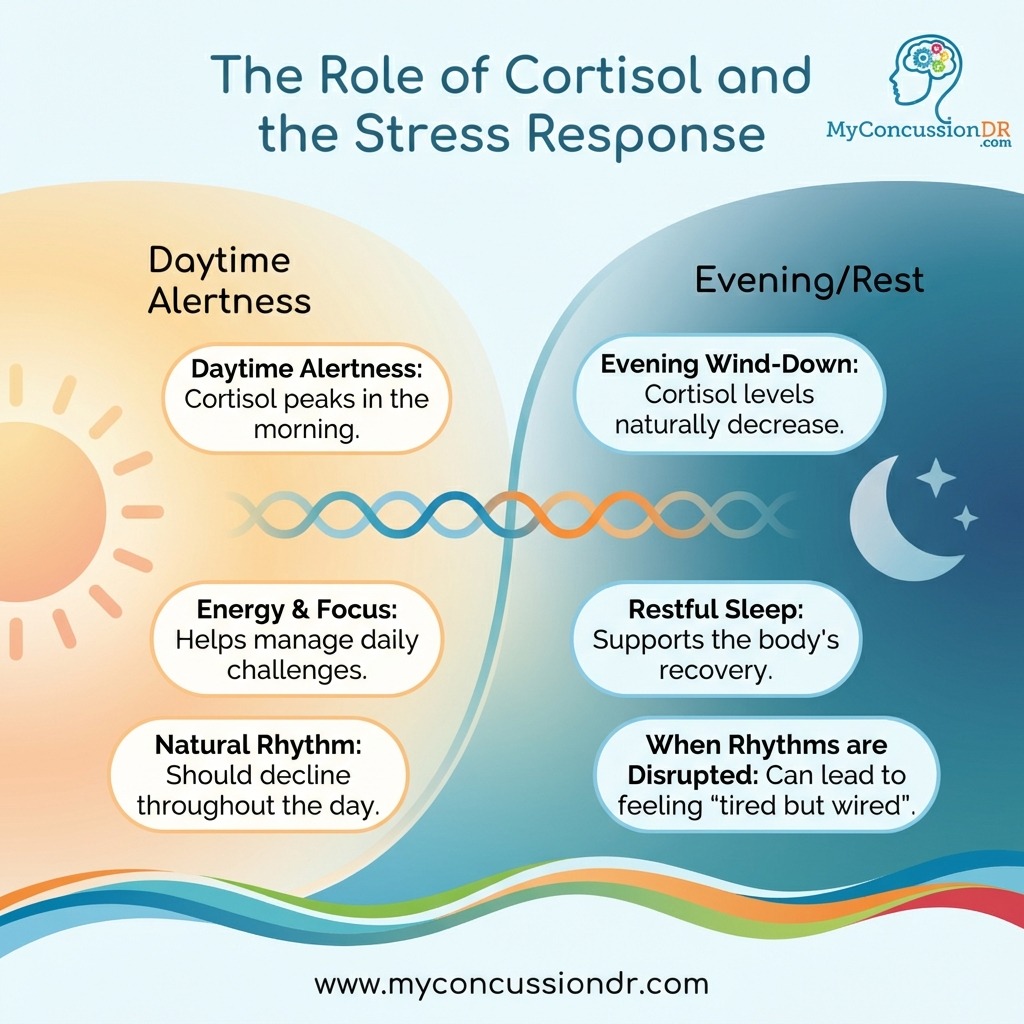
The Role of Cortisol and the Stress Response
Cortisol is a hormone that helps the body respond to stress and stay alert when needed. After a concussion, cortisol patterns can become temporarily disrupted, especially in children whose nervous systems are still maturing.
When cortisol remains elevated later in the day or evening, it can interfere with the natural process of falling asleep. Even if a child appears calm on the outside, their internal stress response may still be active. This internal alertness can make it difficult for the brain to release melatonin, the hormone that supports sleep onset.
This mismatch explains why some children seem overtired yet restless at night. Their bodies signal exhaustion, but their brains remain in a heightened state of awareness. As recovery progresses and stress regulation improves, cortisol patterns often begin to normalize, allowing sleep to return more naturally.
Read More: Balance Problems After Traumatic Brain Injury: How the Brain Relearns Stability
How Brain Energy Disruption Affects Sleep
After a concussion, the brain often struggles to use glucose efficiently, which is its primary energy source. This temporary disruption in glucose metabolism creates an energy gap during a time when the brain actually needs more fuel than usual.
To protect itself, the brain prioritizes essential repair and regulation processes over functions that are not immediately necessary for survival. Sleep regulation is one of the systems that may temporarily receive less support. Even though the body feels exhausted, the brain may not generate the correct signals to initiate or maintain sleep.
When energy signaling is inconsistent, melatonin release can become delayed or irregular. This shifts sleep timing and can cause children to feel tired early in the evening but unable to fall asleep, or to wake frequently during the night. These patterns reflect energy imbalance rather than a lack of healing.
Read More: Vitamin D and the Brain: Supporting Resilience After Head Injury
Why Children Experience this Differently than Adults
Children’s brains are still developing, which makes them more sensitive to changes in energy use, hormones, and sensory input. After a concussion, these shifts can feel more intense even when the injury itself was considered mild.
Children also often struggle to describe internal sensations such as restlessness, mental fatigue, or overstimulation. Instead of explaining how they feel, these sensations may show up as irritability, emotional sensitivity, or resistance at bedtime.
Because emotional regulation systems are still maturing, children may appear more reactive or unsettled before sleep improves. Behavioral signs often appear before sleep patterns fully normalize, which can be confusing for parents who expect tiredness to lead directly to rest.
Read More: The Silent Impact of Jaw Tension on Post Concussion Headaches
Common Signs of Post-concussion Sleep Disruption
These sleep problems after concussion in children can show up in many ways, including:
- Difficulty falling asleep despite extreme tiredness
- Frequent waking during the night
- Early morning waking without feeling rested
- Increased irritability or emotional sensitivity in the evening
- Daytime fatigue paired with nighttime restlessness
These signs are common during recovery and usually reflect temporary changes in brain regulation rather than long-term sleep problems.
Read More: What Causes Brain Fog? Why Memory Slows After a Concussion
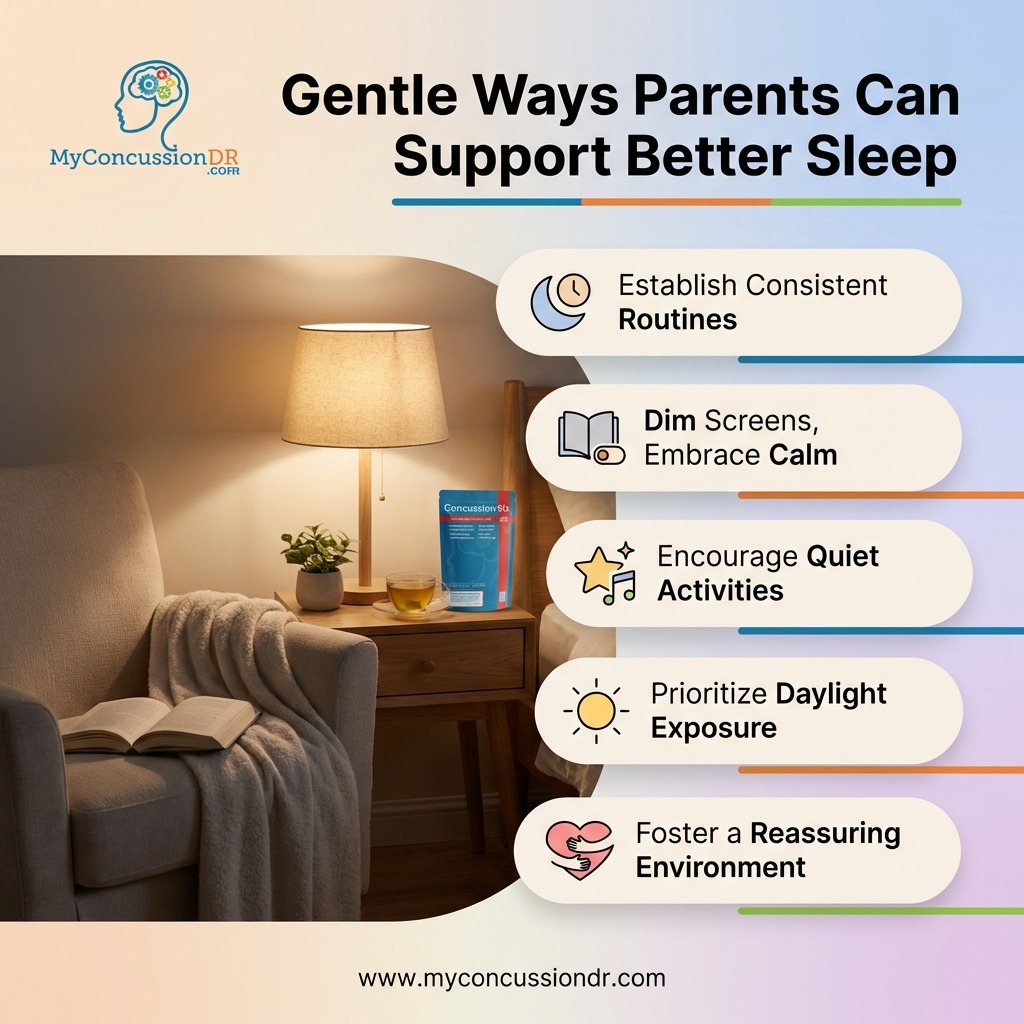
Gentle Ways Parents Can Support Better Sleep
Educational and non-prescriptive support strategies include creating predictability and reducing stimulation:
- Keep bedtime and wake times consistent each day
- Reduce screen exposure in the evening to limit sensory input
- Use dim, warm lighting before bed to signal nighttime readiness
- Encourage calm activities such as reading, quiet play, or slow breathing
- Support daytime exposure to natural light to help reset circadian rhythm
These small routines help the brain recognize patterns of safety and rest, which supports gradual improvement in sleep quality.
Science-backed nutritional support such as Concussion911 includes ingredients that may help support brain energy metabolism and inflammation balance during the early post-concussion window. It is not a medical treatment but a supportive option for families seeking to assist natural recovery processes.
When Sleep Usually Begins to Improve
As brain energy systems stabilize, sleep timing often becomes more predictable. Cortisol patterns gradually settle, allowing the body to transition into rest more easily. Melatonin release improves as the brain regains energy balance and nervous system regulation.
Progress often happens slowly and in stages. Parents may notice small improvements first, such as falling asleep a little faster or fewer night wakings, before full restfulness returns.
When To Seek Professional Guidance
It may be helpful to seek professional guidance if:
- Sleep problems last for several weeks
- Fatigue or emotional changes worsen instead of improving
- Sleep disruption affects school performance or daily function
- Nighttime anxiety or frequent waking does not ease over time
A healthcare professional can help assess sleep patterns and provide additional guidance tailored to your child’s recovery.
Takeaway
Sleep problems after a concussion do not mean your child is not healing. Being tired but unable to sleep reflects temporary changes in brain energy use, stress regulation, and circadian rhythm. With patience, calm routines, and supportive care, most children gradually return to more restful and predictable sleep patterns.
Learn how early science-backed nutritional support may help support your child’s brain energy during recovery. Explore Concussion911.
Required Disclaimer
Concussion911 is a dietary supplement and is not intended to diagnose, treat, cure, or prevent any disease. This product has not been evaluated or approved by the U.S. Food and Drug Administration (FDA). Any statements made are for informational purposes only and are not medical advice. Always consult with a healthcare professional before beginning any new supplement.
FAQs
1. Can a concussion cause trouble sleeping?
Yes. Sleep problems are very common after a concussion. The injury can temporarily disrupt brain energy use, stress hormones, and circadian rhythm, making it harder to fall asleep, stay asleep, or feel rested even when very tired.
2. What are the symptoms of a concussion in a child?
Common symptoms in children may include:
- Headache or head pressure
- Fatigue or low energy
- Difficulty sleeping or sleeping too much
- Irritability or emotional changes
- Trouble concentrating or remembering
- Sensitivity to light or noise
Symptoms can appear immediately or develop over several days.
3. What is the best treatment for post-concussion syndrome?
There is no single treatment. Support typically focuses on:
- Gradual return to normal activity
- Rest balanced with gentle movement
- Sleep support and routine
- Symptom-guided pacing
- Professional guidance when symptoms persist
Recovery is individualized and often involves addressing sleep, stress, nutrition, and daily habits together.
4. How much sleep is normal after a concussion?
In the early phase, increased sleep or fatigue is common. Many individuals, especially children, may need more sleep than usual for several days or weeks. Sleep needs gradually return to baseline as recovery progresses.
5. What are three delayed symptoms of a concussion?
Delayed symptoms may include:
- Sleep disruption
- Mood or emotional changes
- Difficulty concentrating or memory fog
These symptoms can appear days after the initial injury and are a normal part of recovery for some individuals.
6. How long should the brain rest after a concussion?
Short periods of rest are important in the first one to two days. After that, gradual and guided return to light activity is often encouraged as tolerated. Prolonged complete rest is usually not recommended unless advised by a healthcare professional.